
Creating a Soak or Frog Bog
By Claudia Green
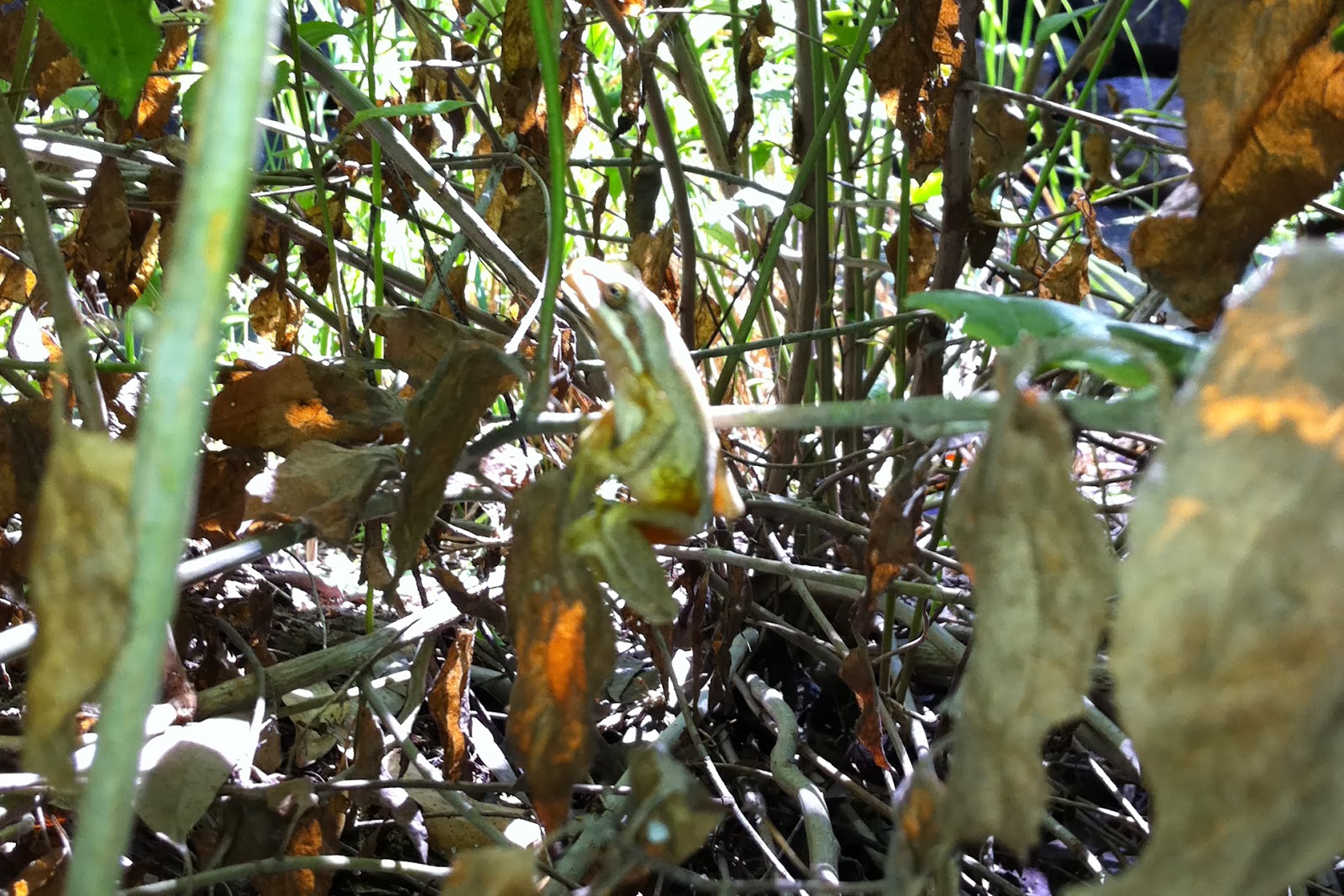 |
| A Frog from Phillip's garden in Olinda! |
You may not be able to fit one of our amazing billabongs into your property, but there are other options for attracting wildlife to your garden
and for harnessing some of all that rainfall!
A soak is a simple depression in the ground
that captures water runoff from hard surfaces and allows it to slowly
infiltrate the soil. When planted up with suitable plants, a soak provides
a haven for wildlife, replenishes soil water and reduces runoff.
To build a soak it is best to pick a spot
in your garden that is already a natural low point and where it can capture
water running off from hard surfaces. Next time it rains, watch where water
pools in the garden and where it runs off rapidly and potentially causes
problems, such as puddles directly outside the door, water running under the
house or eroding you driveway. If
there is a spot where water pools naturally and it is convenient, then locating
the soak here will save you a lot of hassle. Ideally, locate it where it will
help capture some runoff from paths, roads or roofs (although a down pipe might
deliver more water than the soak can handle during heavy rain).
Dig down about 50cm in the centre and
create some gently graded “beach” areas around the banks. The soak should ideally
be at least 1m in diameter but you can turn it into a more interesting shape.
Make sure it is wide enough that you have enough space to place some larger
rocks around the edge and even one or two in the middle.
Once you have dug your hole you can line it
with geofabric to reduce weed growth and help keep the subsoil from muddying up
the soak. However, this is not essential, as the base of the soak will have
pebbles, rocks and plants in it anyway. If you have very sandy soil you may
wish to use geofabric or another permeable liner or even line the base with
clay in order to keep the water in the soak a little longer.
Now you might want to include some larger
rocks around your soak. These rocks will help protect the banks against
erosion, provide shelter for lizards, frogs and insects and are visually
appealing. Use a range of sizes and shapes based on your budget and capacity to
carry and place them on site and remember that very large rocks around a small
soak will look out of proportion.
You can also use rocks and pebble in the
base to create dry creek beds at the points where water actively flows into
the soak. Again this will prevent erosion and will filter mud and other debris
out of the runoff water before it enters the soak.
Finally, plant up your soak with suitable
plants that filter the water and provide shade, shelter and food for wildlife.
These plants will need to be able to cope with both wet feet AND drying out. The
following list is some of our best performers for these types of environments.
For more plant ideas visit your local community nursery.
Strappy
leaved plants: Great for filtering runoff and
preventing erosion due to their fibrous root systems.
-
Dianella species
-
Lomandra species esp. L.
longifolia and L. confertifolia
-
Poa labillardieri
-
Meeboldina scariosa
Groundcovers
-
Dichondra repens
-
Viola hedraceae (plant in the
shade)
-
Pratia pedunculata
Shrubs
-
Callistemon species – check
with your nursery as they come in many different sizes and various flower colours
-
Banksia robur
-
Viminaria juncaea
Trees
-
Tristianopsis laurina
-
Acacia cognata
-
Waterhousia floribunda
Nurture your soak as you would any other
part of the garden, watch it grow and watch and listen for the sites and sounds
of the wildlife that will soon call your soak “home”.
It is amazing how frogs will simply appear
when there is a suitable water source. Even though your soak will most likely
dry out during summer, simply providing a temporary body of water still gives
frogs and other animals a safe place to breed, feed and find shelter.


